It's been a week since I've read any of the Rogers Park-related blogs. It started quite accidentally, but once I realized it had been a couple days, I thought, "I can do this!" Do I feel some symptoms of withdrawal? Yes. Do I find myself thinking, "I could fill the next five minutes by reading some ridiculously dramatic and vitriolic trash?" Absolutely. Do I twitch and sweat and mutter to myself? Well, yes, but that has nothing to do with this.
But: Do I feel better? Do I feel more positive about the people in my neighborhood? Do I feel better about people and humanity in general?
You bet'cha. It's beautiful outside and there's no room in this world for the petty bickering. And now that the weather is settling in, it's time to go back outside and play. I think I'll be moving this party back over to the other address, abandoned these many months.
Tuesday, May 23, 2006

Friday, April 28, 2006
Italic type

Italic type refers to a cursive typeface based on a stylized form of calligraphic handwriting.
Italic type is used for the following things:
- emphasis
- the titles of works that stand by themselves
- the names of ships
- foreign words
- use-mention distinction
- introducing terms
- the latin binary nomenclature, in the taxonomy of living organisms
- symbols for physical quantities and other mathematical variables
"Italic type." Wikipedia, The Free Encyclopedia. 25 Apr 2006, 21:31 UTC. 29 Apr 2006, 00:48 .
Italic type
- direct quotes
- indirect quotes
An example of how not to use italic type:
- “His most rational response to my attempts at drawing him out about literature and art was 'I adore italics, don't you?'” --Siegfried Sassoon
Wednesday, April 26, 2006
Foie gras

Introduction
Foie gras is the fattened liver of a duck or goose. In the production of foie gras, the animals are fed through a feeding tube which many people view as being inhumane. However, many studies have shown that the process not only causes no damage to the animals, but they don't feel any discomfort as they lack a gag reflex and have much tougher esophogi than humans.
Ancient History
It turns out that people have been eating this stuff since at least 2500 B.C. Can you believe it? There are bas relief depictions of Egyptian slaves overfeeding geese so that their livers can be harvested and eaten. Interestingly, in 2450 B.C., an Egyptican provincial governor (known as nomarchs) named Laomoodreej proposed a ban on the production and sale of the delicacy. Fortunately for lovers of the food, the pharaoh had the unpopular nomarch executed.
As the Romans took over the planet, they too became fond of foie gras, stuffing their geese with figs -- the word "ficatum" which means "figs" eventually became the root for the word "foie" which means "liver." The Romans, with their love of food and orgies never had an issue with anyone attempting to ban anything.
After the fall of the Roman empire, foie gras seems to have vanished from European cuisine. Fortunately for us, Jews, being unable to use lard due to dietary restrictions, revived the tradition of shoving food down the throats of geese and ducks in order to use the fatty liver for cooking. Their love of the food soon faded, but not before others picked up on it again. In 1570, a scant 92 years after Ferdinand and Isabella began trying, torturing and executing Jews in the name of the Catholic Church, the Pope's chef published a cookbook in which he wrote that the Jews were able to produce duck and goose livers weighing over three pounds. There is no proven connection between the Spanish Inquisition and the Jewish propensity towards force-fed waterfowl, but experts have recently uncovered some evidence that says there may be something to that theory.
Current Production and Controversy
Currently, it is the French who produce most of the world's foie gras with 80% of the world's production coming from that country. 30,000 people are involved in that industry in the country. Fearful of European attempts to ban foie gras, French legislators passed a law declaring foie gras to be an important part of France's history and culture, granting it the same protections given to the Eiffel Tower.
In an ironic move, the Supreme Court of Israel has banned production of foie gras in the entire country. The people who once excelled at the creation of the tasty dish have decided to put down their food pellets and hang up their feeding tubes.
Following in Israel's footsteps, the Illinois Senate has passed a law banning production in the state. It was a pretty bold move considering that there has never been a foie gras farm anywhere near Illinois. More forceful, perhaps, is the recent ban on the serving of foie gras at restaurants in the city of Chicago -- a city known as "the hog butcher to the world."
- "Joe Banks, 82 years young, has come to this pond every day for the past 17 years to feed the ducks. But last month Joe made a discovery: the ducks were gone." -- Bart Simpson
- “If you feel the urge, don't be afraid to go on a wild goose chase. What do you think wild geese are for anyway?” -- Will Rogers
- “Man who stand on hill with mouth open will wait long time for roast duck to drop in.” -- Confucius
Pluralis majestatis

Pluralis majestatis or "the royal we" is a plural pronoun used to refer to one person alone. Its usage is often restricted to "royalty" -- monarchs, Popes, etc. -- who are always speaking not just for themselves, but also for their people.
Similar to the royal we is the "editorial we" used by journalists. With the editorial we, the people for whom the writer is speaking is the staff of the news organization for which the writer works. Interestingly, usage of the editorial we has spread to blogs, but bloggers often work for no organization. In this case they are not necessarily speaking for "their people" but rather are creating a professional distance between themselves and that which they write. For example, Jeralyn, of TalkLeft discussed at length the idea of using the editorial "we" vs. "I" in her posts, even going so far as to experiment with using "I" for a week. Judging by the most recent entries on her site, it seems that "I" came out on top.
- “We are not interested in the possibilities of defeat. They do not exist.” -- Queen Victoria
- "We are not impressed." -- Christina Guskweck
- “Only kings, presidents, editors, and people with tapeworms have the right to use the editorial 'we.'” -- Mark Twain
Tuesday, April 18, 2006

Sunday, April 16, 2006
Messianic complex

A messianic complex is a psychological state in which someone believes himself to be the savior of the world. This may take shape in many forms: from a subtle quietly held belief of his divine nature to outright declaration of their status as the son of God.
Throughout history, many people have claimed to be Jesus, most recently, Marshall Applewhite, leader of the Heaven's Gate Cult.
Some more links: here, here, here, here, here, here, here, here, here, and here.
Yellow Journalism
Yellow journalism "is a pejorative reference given to various practices or tendencies of news media organizations which, by the standards of journalistic professionalism, are considered to be unprofessional and detrimental to the principles of journalistic integrity as a whole."
In other words: crappy, sensationalizing, tabloid "press." It's stuff that's not worth reading. It's not worth listening to. It's not worth watching. It's poorly written, devoid of content, and completely without merit. Sometimes it's referred to as "infotainment" -- a combination of information and entertainment -- but for my money, there's not enough of either to merit that description.
You can find it everywhere: from tabloid newspapers and their sensationlist headlines to Fox news and Walter Jacobson's hyper-dramatic, over-enunciated drivel. It's an obvious -- yet effective -- technique to sell more papers and gain more viewers. People love the overly dramatic and will flock to it. This translates directly into more money in the pockets of the companies that own the media.
Interestingly, this sort of "journalism" has made its way into personal blogsites. Some bloggers have made their "careers" on the practice of treating the smallest things as big news; creating controversy where there is none; and creating a mob rule atmosphere. By creating a culture of fear, these bloggers have effectively rallied people to their cause -- vague though that cause may be -- and continue to create an "us against them" atmosphere without even clearly defining what the sides are. Because there is no money (none that I can see, anyway) involved, I can only assume that it's a popularity contest, or a cry for help and attention.
Some links:
In other words: crappy, sensationalizing, tabloid "press." It's stuff that's not worth reading. It's not worth listening to. It's not worth watching. It's poorly written, devoid of content, and completely without merit. Sometimes it's referred to as "infotainment" -- a combination of information and entertainment -- but for my money, there's not enough of either to merit that description.
You can find it everywhere: from tabloid newspapers and their sensationlist headlines to Fox news and Walter Jacobson's hyper-dramatic, over-enunciated drivel. It's an obvious -- yet effective -- technique to sell more papers and gain more viewers. People love the overly dramatic and will flock to it. This translates directly into more money in the pockets of the companies that own the media.
Interestingly, this sort of "journalism" has made its way into personal blogsites. Some bloggers have made their "careers" on the practice of treating the smallest things as big news; creating controversy where there is none; and creating a mob rule atmosphere. By creating a culture of fear, these bloggers have effectively rallied people to their cause -- vague though that cause may be -- and continue to create an "us against them" atmosphere without even clearly defining what the sides are. Because there is no money (none that I can see, anyway) involved, I can only assume that it's a popularity contest, or a cry for help and attention.
Some links:
Friday, April 14, 2006
Cut and paste (copied and pasted)

In human-computer interaction, cut and paste or copy and paste is a user interface paradigm for transferring text, data, files or objects from a source to a destination. Most ubiquitous is the ability to cut and paste sections of plain text. This paradigm is closely associated with graphical user interfaces that use pointing devices.
The term cut and paste derives from the traditional practice in manuscript editing in which paragraphs were literally cut from a page with scissors and physically pasted onto another page. This was standard practice as late as the 1960s. Editing scissors with blades long enough to cut an 8-1/2"-wide page were available at stationery stores. The advent of photocopiers made the practice easier and more flexible.
The cut-and-paste paradigm was widely popularized by Apple in the Lisa (1981) and Macintosh (1984) operating systems and applications. It was mapped to a key combination consisting of a special control key held down while typing the letters X (for cut), C (for copy), and V (for paste). Similar key combinations were later adopted by Microsoft in Windows. Common User Architecture (in Windows and OS/2) also uses combinations of the Insert, Del, Shift and Control keys. Some environments allow cutting and pasting with a computer mouse (by drag and drop, for example).
Copy and paste
Copy-and-paste refers to the popular, simple method of reproducing text or other data from a source to a destination, which is only different from cut and paste in that the original source text or data is not deleted or removed as it is with the latter process.
Copying can be performed on most graphical user interface systems using the key combinations Ctrl+C (in UNIX environment used for killing the running process) or Ctrl+Ins (the former being more widely supported), or by using some other method, such as a context menu or a toolbar button. Once data have been copied into the area of memory referred to as the clipboard, they can be pasted into a destination using the key combinations Ctrl+V or Shift+Insert, or methods dependent on the system. Macintosh computers use the key combinations Command+C and Command+V. In the X Window System, selecting text copies it to a clipboard, while middle-clicking pastes.
The popularity of this method stems from its simplicity and the ease with which data can be moved between various applications without resorting to permanent storage.
"Cut and paste." Wikipedia, The Free Encyclopedia. 12 Apr 2006, 14:46 UTC. 12 Apr 2006, 22:00
- “I say that I can't make anything up. I think of myself as a collage artist. I'm cutting and pasting memories of my life. And I say, I have to live a life in order to tell a life. I would prefer to tell it because telling you're always in control, you're like God.” -- Spalding Gray
- “If you want to be successful, find someone who has achieved the results you want and copy what they do and you'll achieve the same results.” -- Anthony Robbins
- “Success is dangerous. One begins to copy oneself, and to copy oneself is more dangerous than to copy others. It leads to sterility.” -- Pablo Picasso
Wednesday, April 12, 2006
Cut and paste
In human-computer interaction, cut and paste or copy and paste is a user interface paradigm for transferring text, data, files or objects from a source to a destination. Most ubiquitous is the ability to cut and paste sections of plain text. This paradigm is closely associated with graphical user interfaces that use pointing devices.
The term cut and paste derives from the traditional practice in manuscript editing in which paragraphs were literally cut from a page with scissors and physically pasted onto another page. This was standard practice as late as the 1960s. Editing scissors with blades long enough to cut an 8-1/2"-wide page were available at stationery stores. The advent of photocopiers made the practice easier and more flexible.
The cut-and-paste paradigm was widely popularized by Apple in the Lisa (1981) and Macintosh (1984) operating systems and applications. It was mapped to a key combination consisting of a special control key held down while typing the letters X (for cut), C (for copy), and V (for paste). Similar key combinations were later adopted by Microsoft in Windows. Common User Architecture (in Windows and OS/2) also uses combinations of the Insert, Del, Shift and Control keys. Some environments allow cutting and pasting with a computer mouse (by drag and drop, for example).
Copy and paste
Copy-and-paste refers to the popular, simple method of reproducing text or other data from a source to a destination, which is only different from cut and paste in that the original source text or data is not deleted or removed as it is with the latter process.
Copying can be performed on most graphical user interface systems using the key combinations Ctrl+C (in UNIX environment used for killing the running process) or Ctrl+Ins (the former being more widely supported), or by using some other method, such as a context menu or a toolbar button. Once data have been copied into the area of memory referred to as the clipboard, they can be pasted into a destination using the key combinations Ctrl+V or Shift+Insert, or methods dependent on the system. Macintosh computers use the key combinations Command+C and Command+V. In the X Window System, selecting text copies it to a clipboard, while middle-clicking pastes.
The popularity of this method stems from its simplicity and the ease with which data can be moved between various applications without resorting to permanent storage.
"Cut and paste." Wikipedia, The Free Encyclopedia. 12 Apr 2006, 14:46 UTC. 12 Apr 2006, 22:00
- “I say that I can't make anything up. I think of myself as a collage artist. I'm cutting and pasting memories of my life. And I say, I have to live a life in order to tell a life. I would prefer to tell it because telling you're always in control, you're like God.” -- Spalding Gray
- “If you want to be successful, find someone who has achieved the results you want and copy what they do and you'll achieve the same results.” -- Anthony Robbins
- “Success is dangerous. One begins to copy oneself, and to copy oneself is more dangerous than to copy others. It leads to sterility.” -- Pablo Picasso
Saturday, April 08, 2006
Coherence

Coherence, in language, is basically a state when things all fit together to make sense. Being coherent takes a lot of things working in the right way when speaking. A speaker must know the right language to use for his audience and he must also know the right words to use in that language. He must also speak clearly and concisely, in an appropriate manner to suit his audience. The written language has a few benefits for coherence's sake: namely, the ability to really think about what words one will use; less potential for "stage fright" causing nervousness; and the use of technology (such as spell checkers and online reference libraries.)
That said, there are some amazingly incoherent writers out there. I know I'm a stickler for details such as spelling and grammar. I admit that sometimes I'm too harsh when it comes to judging these things. People say, "As long as you know what I'm trying to say, does it matter if everything's spelled correctly?" To a certain extent, I can agree with that. The most important thing when writing something is getting your meaning across -- if a typo or grammatical error pops up here or there, what's the big deal?
A writer must be careful, however, that he does not lose credibility through repeated mistakes. A reader will make judgments on the trustworthiness of an article and its author based on the evidence they have available. With the absence of a physical presence, the writer's words are the main things a reader can use. If the writer's words are misspelled or misused, a reader might dismiss the writer's arguments without even paying attention to what they are. Take for example these two (hypothetical) statements:
"teh simpsons r teh best shoe on tv simpsons r rulez!"
"'The Simpsons' is a TV show that has absolutely no merit whatsoever and should be removed from the airwaves."
Now, because of the childish and poorly written nature of the first statement, one might be inclined to disassociate oneself from the writer to the point of disagreeing with the content. Even though the writer's point is made and is (mostly) coherent, the obvious lack of attention paid to the form of the message is sure to turn many a reader off.
Real problems (beyond the reaction of your readers) arise when statements become so confusing that a reader can't tease even the slightest bit of meaning out of the content. It is possible to write in such a convoluted and confusing manner that a reader is just left shaking his head, wondering what the writer had in mind. It is sometimes amazing that an intelligent and capable person who speaks the same language as his readers could create something that is so incoherent that no message is relayed at all. Much of this could be avoided if the writer would just take a minute to reread what he's written and ask himself, "Does this make sense? Is this how I would have spoken this argument?" Reading the work out loud can also help. Best of all, having someone else read the content will go a long way towards ensuring that everything that the writer intends will come through clearly and without any confusion.
- "The shift from incoherence to coherence can bring dramatic effects." -- William Tiller
- “These conflicting messages reflect a lack of clarity and coherence." -- Michael Shifter
Thursday, April 06, 2006
Retronym

Retronyms are words coined for the purpose of describing an object or concept whose original name is no longer unique. Often, these words are necessitated by the advent of technology -- such as when email and voicemail became prevalent, the term "snail mail" came into being. Also, the invention of the electric guitar brought along the term "acoustic guitar."
However, there are also non-technological retronyms. Before World War II, World War I was known as "The Great War" or "The War to End All Wars." And when a sequel to a movie comes out, the original is often commonly referred to as (for example) "Jaws 1" or "Star Trek 1."
Monday, April 03, 2006
Wikipedia

It should come as no surprise that I love Wikipedia.org. According to Wikipedia's own entry, it is a "multilingual Web-based free-content encyclopedia." Wikipedia is also known as "the free encyclopedia that anyone can edit." Anybody who spends a little time learning the formatting standards and methods (look at the Wikipedia Wikipedia Boot Camp for help) can edit, add to, and create articles on the site, contributing their knowledge and expertise to that of the community. It's a truly amazing model for information collection and dispersion, putting control of the information in the hands of the users.
These users form a community that is dedicated to research and education. One amazing feature of the site is the reference desk where one can ask a question about any topic that is not easily found in the encyclopedia. The other users on the site will contribute their thoughts and comments on the topic.
Wikipedia's main strength can also be its biggest weakness -- by creating a community-based site and calling it an "encyclopedia" it makes it possible for people to publish false and malicious information in a trusted forum. However, a conscientious researcher will always consider his or her source carefully before considering the information to be factual. With the advent of the internet and the ability for anybody to publish anything, this is even more important.
Worse than information that is incomplete or incorrect is information that is purposely misleading, irrelevant or inconsistent with the mission of the site. Take for example the John Siegenthaler biography controversy in which a Wikipedia user edited the biography entry for John Siegenthaler Sr., suggesting that he had a role in the Kennedy assassination.
Other people may edit entries and add information that is completely irrelevant to the article. For instance, there is the recent bit of editing of the "smoke and mirrors" article in which a user has attempted to a statement about the 49th Ward of Chicago's tendency to make use of "smoke and mirrors." Fortunately, it is easy to revert the article to a state where it better fits in with the purpose of the site, and it is also possible to see what other edits this user has made and hopefully put a stop to it. (See the article's edit history and the activities of 24.12.63.77.
- "[H]owever closely a Wikipedia article may at some point in its life attain to reliability, it is forever open to the uninformed or semiliterate meddler." - Former Encyclopedia Britannica editor Robert McHenry in an oft-cited 2004 piece The Faith-Based Encyclopedia.
- "Wikipedia knows all, and what it doesn't know, you can tell it." - Shaye Horwitz
- "The real problem is not Wikipedia, but reporters who fail to check their facts." - Joseph Wilson
- "Only an idiot and a thug would scribble nonsense in a library book." - Alison Hess Garcia
Friday, March 31, 2006
Photo essays

A photo essay is a set or series of photographs used to tell a story or evoke an emotion in the viewer. Photo essays are sometimes made up of many photographs and text captions, or just the phototgraphs themselves, leaving the interpretation in the hands of the viewer. "All photo essays are collections of photographs, but not all collections of photographs are photo essays." Your vacation photos probably don't count.
Sometimes photo essays appear in an article or publication -- often taking up multiple pages. They might appear in a book or on a web site. Sometimes they'll appear as a single montage of photographs.
Photo essays can be incredibly powerful. By combining many different photographs focused in some way on one topic, the viewer can get a feel for the big picture of an event.
- “Think about the photo before and after, never during. The secret is to take your time. You mustn't go too fast. The subject must forget about you. Then, however, you must be very quick.” -- Henri Cartier-Bresson
- “I take a lot of photos of people.” -- Heath Ledger
- “In France we have a law which doesn't allow the press to publish a photo that you didn't approve. It lets the paparazzi take the picture, but if they publish this picture, you have the choice to sue the newspaper. So me, I always sued them.” -- Audrey Tautou
- "One picture is worth a thousand words, but that's still not even a fraction of the story." -- Anthony Eosine Sposato
Monday, March 27, 2006
Power naps

A power nap (or catnap) is "a short nap, usually 15-30 minutes" in duration. Some people swear by these short naps, saying that they wake up feeling refreshed and energized. Others find themselves feeling groggy and disoriented upon waking up. Regardless, the ability to shut down for even a short period of time is beneficial to both mind and body.
Naps also have great nostalgic value. They bring to mind nap time from our youth. Back then, we had all the time in the world -- enough even to go to sleep in the middle of the day. As we've aged, time is tighter. There's never enough. It's a joy to be able to find some extra time to do absolutely nothing but clear our minds, and rest our bodies.
A nap industry has even arisen in recent years. Companies such as Metro Naps have created spaces and equipment to facilitate napping for busy professionals.
- "Oh boy! Sleep! That's where I'm a Viking!" -- Ralphie Wiggum (from "The Simpsons")
- "“No day is so bad it can't be fixed with a nap." -- Carrie P. Snow
- "“I usually take a two hour nap from one to four"” -- Yogi Berra
- "Think what a better world it would be if we all, the whole world, had cookies and milk about three o'clock every afternoon and then lay down on our blankets for a nap."” -- Barbara Jordan
Thursday, March 16, 2006
Non-sequitur

There are two forms of non-sequitur that I am interested in. First, there is non-sequitur that is a logical fallacy. This form of non-sequitur occurs when a statement does not follow from a premise even if all the statements are true (or false). With non-sequitur, one cannot make the determination about the validity of the statements.
For example:
A) All cats are mammals.
B) My cat is cute.
C) Therefore, all mammals are cute.
or:
A) Joe Moore is a jerk.
B) Someone broke my windows.
C) Therefore, I will blame Joe Moore. Where are the Cheetos?
This last example not only illustrates the logical fallacy, but also the other form of non-sequitur, which is absurdism. Absurdist non-sequiturs are statements (or actions) that have so little connection to the context within which they occur that they are absurd, often to the point of being humorous. Many comic strips, comedians, television shows and cartoons are largely based around the humor of the non-sequitur.
In thinking about non-sequitur, we must remember that the two forms are not mutually exclusive. Many logical non-sequiturs can be so ridiculous that they are absolutely hysterical. They leave the reader wondering, "How the hell did they come to that conclusion?" One can only shake one's head, smile a bemused little smile and move on.
No quotes today, but here's that famous joke:
Q: How many surrealists does it take to screw in a lightbulb?
A: Fish.
Thursday, March 09, 2006
Argumentum ad Hominem

An ad hominem argument is one focuses on attacking the person presenting the argument rather than addressing the issue of the argument itself. It is a logical fallacy.
There are three types of ad hominem arguments: ad hominem tu quoque, ad hominem circumstantial, and ad hominem abusive.
Ad Hominem tu Quoque
Ad Hominem tu Quoque ("you too!") is an instance when a person's argument is dismissed simply because they are also guilty of that which they are arguing about.
For example:
Person A: By selling your house to a developer who is going to tear it down and build a crappy looking condo building, you are ruining our community.
Person B: But you're doing exactly the same thing! That means it's okay!
While it may be hypocritical for Person A to make this argument, it does not make his point invalid. We often criticize people for things that we ourselves are guilty of. Our guilt does not invalidate the criticism.
Ad Hominem Circumstantial
Ad Hominem Circumstantial constitutes an attack on the bias of a person. This is fallacious because pointing out one's predisposition towards a certain position does not invalidate their argument in any way.
Example:
Person A: Selling your house to a developer who is going to tear it down and build a beautiful condo building helps the community immeasurably.
Person B: Of course you think that! You're a developer!
Ad Hominem Abusive
Finally, we get to ad Hominem Abusive (my personal favorite). This one consists of an insult of the argument's presenter. As examples show, it can take several forms:
Person A: Selling your house to a developer who is going to tear it down and build a beautiful condo building helps the community immeasurably.
Person B: Don't listen to him, he doesn't smell good.
Person A: Selling your house to a developer who is going to tear it down and build a crappy condo building is destroying the neighborhood.
Person B: I disagree because you are an idiot.
Person A: Selling your house to a developer who is going to tear it down and build a beautiful condo building helps the community immeasurably.
Person B: Fuck you.
Ad hominem arguments can be very powerful when they are used in a public setting. By attacking one's opponent, it is possible to cast them in a negative light, thus causing observers to doubt anything they say. Pre-emptively attacking an opponent (also known as poisoning the well) in order to color an audience's reception of an argument can also be very effective. Even if an observer is not aware of it, the attacks may very well create an unconscious bias against anything the attacked person says.
On the other hand, these types of arguments are capable of backfiring. Thoughtful and sensitive observers who are capable of recognizing the fallacious arguments might find that they no longer side with the attacker, simply based on principle alone. Therefore, if one needs to resort to this type of argument, one should be aware of the potential consequences.
Some quotes:
- “Insults are the arguments employed by those who are in the wrong.” -- Jean-Jacques Rousseau
- “A wise man is superior to any insults which can be put upon him, and the best reply to unseemly behavior is patience and moderation.” -- Moliere
- “A gentleman will not insult me, and no man not a gentleman can insult me” -- Frederick Douglass
- “I love it when someone insults me. That means that I don't have to be nice anymore.” -- Billy Idol
Wednesday, March 08, 2006
Kittens

Kittens are pre-adolescent cats. And damn, they're cute. Who wouldn't love a kitten? They're small and fuzzy and they get into the craziest adventures. They're incredibly easy to entertain (and because of this, they are incredibly entertaining.) They like to play with yarn, string, rolled up pieces of paper, shoelaces -- you name it, they'll play with it.
While humans take care of kittens -- feeding them, playing with them, sheltering them -- it is well-documented that they, in turn, take care of us. Petting your cat helps lower your blood pressure and improve your mood. Why, just looking at pictures of kittens will put a smile on the sourest person's face.
There are many websites devoted to kittens (and cats) -- here are a couple:
- Kittenwar.com allows you to choose which of two kitten photographs is cuter
- Infinitecat.com is an amazing cat photography project
- Mycathatesyou.com is less cute, but still fun
And the quotes:
- Ralph: My cat's breath smells like cat food. (from the Simpsons)
- Kent Brockman: ...and the fluffy kitten played with that ball of string all through the night. On a lighter note, a Kwik-E-Mart clerk was brutally murdered last night. (from the Simpsons)
- “A kitten is chiefly remarkable for rushing about like mad at nothing whatever, and generally stopping before it gets there.” -- Agnes Repplier
- “No matter how much cats fight, there always seem to be plenty of kittens.” -- Abraham Lincoln
- “A kitten is so flexible that she is almost double; the hind parts are equivalent to another kitten with which the forepart plays. She does not discover that her tail belongs to her until you tread on it.” -- Henry David Thoreau
Thanks to Rebecca Rouilly for inspiring today's post.
Tuesday, March 07, 2006
Faulty generalizations
James Ginderske's statement on Morse Hellhole that "every single blogger in RP is supporting Claypool because its[sic] the right thing to do for this neighborhood" leads me to this Wikipedia entry about faulty generalizations.
Some quotes:
Some quotes:
- “All generalizations are false, including this one.” -- Mark Twain
- “All generalizations are dangerous, even this one.” -- Alexandre Dumas
- “All generalizations are bad.” -- R.H. Grenier
Tuesday, February 28, 2006
Copyright

A copyright is "a set of exclusive rights granted by governments to regulate the use of a particular expression of an idea or information." These rights usually serve to restrict the ability of individuals to copy, distribute or republish protected works and to protect the ownership of such works. We're all familiar with copyrights and their importance -- we know that it is illegal to make and sell copies of movies, music or books.
However, in the digital age, copyrights and what they protect has gotten less clear. Access to media is so much easier these days. People trade high-quality copies of songs with an ease and quickness that was not possible 10 years ago. Musicians -- record companies, really -- have been facing loss of revenue due to the wide availability of free copies of their products.
Even more at risk than music and movies are the published, written ideas of individuals and companies. Formerly, these texts were -- at the very least -- published in magazines, newspapers or books and had physical weight and presence which would discourage people from out and out copying. Nowadays, with the prevalence of online newspapers, journals and even blogs, the ease with which one can copy and paste content that is not their own makes it all too tempting. Copyright violations are rampant and there is little one can do.
Some copyrights are very lenient. The content on Wikipedia, for example, is made freely available for republishing and reuse so long as one follows certain rules. Their copyright statement says that as long as one doesn't impede the right of other people to copy the material and one provides credit to the original authors (which I do by way of a direct link to any article I make use of) then reposting and reusing their material is legal.
On the other hand, many sites closely guard their content. The Chicago Tribune's website, chicagotribune.com publishes much of the content of their newspaper. Their copyright statement says that it is legal to read, interact with, download and/or print one copy of any piece of content on their site. However, it is expressly forbidden to repost, copy, publish or otherwise distribute any content on their site. That means that copying a story from chicagotribune.com and pasting it into a blog entry -- even if one quotes the source and mentions the original copyright -- is a violation of that copyright.
Some copyright quotes:
- Lawyer: Principal Skinner, "The Happiest Place on Earth" is a registered Disneyland copyright.
Principal Skinner: Oh now, gentlemen, it's just a small school carnival.
Lawyer: And it's heading for a great big lawsuit. You made a big mistake, Skinner.
Principal Skinner: Well, so did you. You got an ex-Green Beret mad.
[he finger-thrusts the first goon in the Adam's Apple, then kicks the lawyer in the chest; they both go down groaning; as the second goon runs away, Skinner picks up the lawyer's briefcase and flings it into the air; in the distance, it knocks down the goon]
Principal Skinner: Copyright expired. (from The Simpsons) - “Only one thing is impossible for God: To find any sense in any copyright law on the planet.” -- Mark Twain
- “My script was copyrighted in 1999 while I was in college, and theirs was copyrighted in 2001, the same year that I was getting investors and letters of intent. A very famous celebrity gave Ice Cube my script and the story board. I am not saying two people can't have the same idea, but for our concepts to be similar is impossible.” -- James Davis
- “This is a plain and brazen violation of copyright law.” -- Nick Taylor
Wednesday, February 22, 2006
Spell checkers
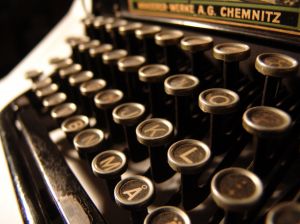
Spell checkers are pieces of software that will check the spelling of words against a set dictionary (or "vocabulary") of stored words. Spell checkers can work on the fly within a document or on demand or as a separate application. Spell checkers are handy tools combating against the evils of misspelling.
One very interesting and useful thing about spell checkers is that when they find a misspelled word, they will make guesses about the true intent of the author and offer up a list of words, correctly spelled that can be used to replace the misspelled word. Also useful is the ability to add one's own words to the vocabulary so that words that one uses that may not be widely known (such as one's name, regional slang or abbreviations) do not trigger the spell checker's error routines.
One problem with spell checkers is that they currently do not check the context of the word, meaning that while a word may be spelled correctly, it is not properly used. For example, if one wrote, "Hear again wee keep sending beating victim's and gunshot victim's to Evanston for care," a spell check would not display any errors because even though there are incorrect spellings and improper uses of apostrophes, none of the words are technically misspelled. These types of errors can only be caught and corrected through human proofreading.
Fortunately for us all, spell checkers have popped up in many software applications. Most email clients, instant messengers, and databases now have the ability to check your spelling on the fly, letting you know if you've made an error. The screen on which I make this entry even has a spell checker, ensuring that virtually every blog entry ever written by anybody will be free of spelling errors for all of eternity.
Quotes about spelling:
- Lisa: Come to Homer's BBBQ. The extra B is for BYOBB.
Bart: Hey, Homer, what's that B for?
Homer: That's a typo. - “I respect a man who knows how to spell a word more than one way” -- Mark Twain
- “Beware of the man who denounces women writers; his penis is tiny and he cannot spell.” -- Erica Jong
- “My spelling is Wobbly. It's good spelling but it Wobbles, and the letters get in the wrong places.” -- A.A. Milne
Subscribe to:
Posts (Atom)
